Taxes to Pay When Selling a House in Benissa or Moraira (2026 Guide)
Complete Guide to Capital Gains Tax, Plusvalía and Non-Resident Property Taxes in Costa Blanca North
Selling a property in Spain without understanding the taxes involved can cost sellers thousands of euros unnecessarily. This guide explains exactly what property owners in Benissa and Moraira need to know before selling their home in 2026.
If you are planning to sell your property in Benissa or Moraira, understanding the taxes involved is essential before putting your home on the market.
Whether you own a villa in Moraira, an apartment in Benissa Costa, or a traditional finca in Costa Blanca North, knowing the taxes when selling property in Spain can help you avoid unexpected costs and maximise your final profit. Many sellers are surprised by the final costs at completion, especially foreign property owners who are unfamiliar with the Spanish tax system.
As local real estate experts in Benissa and Moraira, one of the most common questions we hear is:
“What taxes do I need to pay when selling my property in Benissa or Moraira?”
In this guide, we explain the main taxes, costs, exemptions, and important tips you should know before selling your home in Spain.
What Taxes Do You Pay When Selling Property in Benissa or Moraira?
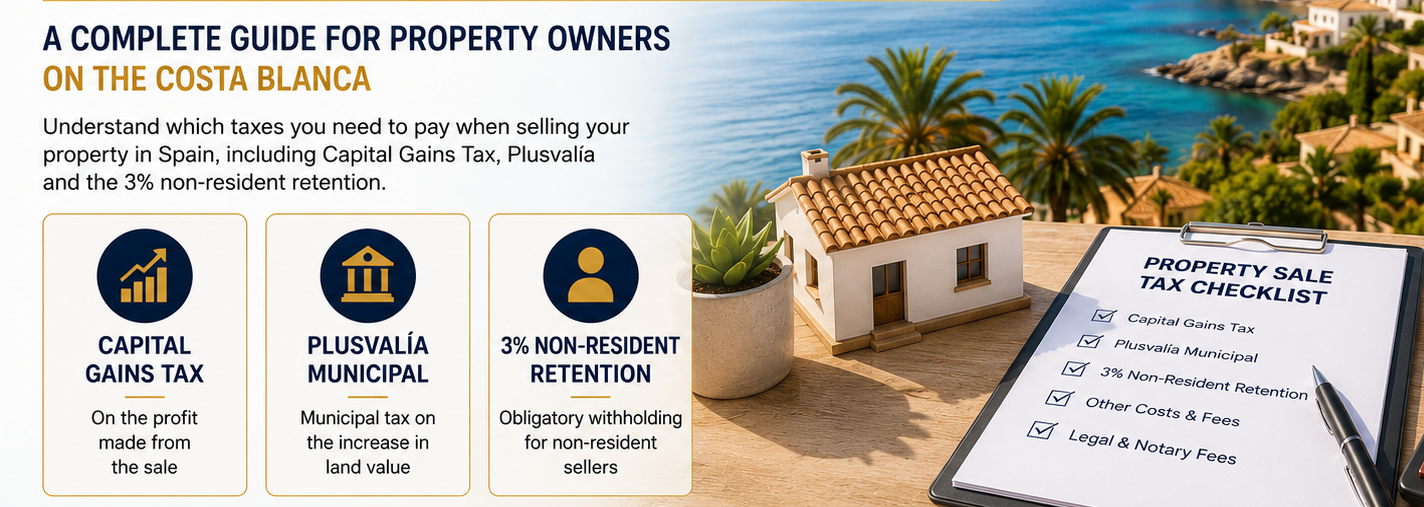
When selling a property in Spain, sellers usually face three main tax obligations:
- Capital Gains Tax in Spain
- Plusvalía Municipal tax
- The 3% retention for non-resident sellers
Understanding these taxes before accepting an offer is extremely important, especially for international property owners in Costa Blanca.
1. Capital Gains Tax (Impuesto sobre la Ganancia Patrimonial)
Capital Gains Tax is the main tax sellers pay when selling a property in Spain.
This tax is calculated based on the profit you make from the sale:
Selling Price – Purchase Price – Allowable Expenses = Taxable Gain
Allowable expenses may include:
- Estate agency fees
- Lawyer fees
- Notary and registry costs
- Purchase taxes paid when you bought the property
- Renovation works with official invoices
- Energy certificate costs
Tax Rates for Spanish Residents
If you are a Spanish tax resident, the current tax bands are:
- 19% on the first €6,000
- 21% from €6,001 to €50,000
- 23% from €50,001 to €200,000
- 27% from €200,001 to €300,000
- 28% above €300,000
Real Example: How Capital Gains Tax Is Calculated
Let’s look at a simple example:
- Original purchase price: €300,000
- Selling price: €450,000
- Renovations and allowable expenses: €40,000
Taxable gain:
€450,000 – €300,000 – €40,000 = €110,000 taxable gain
This is the amount used to calculate Capital Gains Tax.
Many sellers forget that legal costs, renovation invoices, and purchase taxes can reduce the taxable amount significantly.
Tax Rates for Non-Residents
If you are not a tax resident in Spain, the standard Capital Gains Tax rate is generally:
- 19% for non-residents
This applies to many international property owners in Benissa and Moraira.
2. The 3% Retention for Non-Residents
If the seller is a non-resident, Spanish law requires the buyer to retain 3% of the sale price and pay it directly to the Spanish tax office (Hacienda).
This is not an extra tax.
It is an advance payment toward the seller’s Capital Gains Tax liability.
For example:
- Sale price: €500,000
- 3% retention: €15,000
After the sale, the seller must submit the relevant tax forms to calculate the final amount due.
- If the real tax is lower than the retention, the seller can request a refund.
- If the real tax is higher, the seller must pay the difference.
This is one of the most important points foreign sellers should understand before selling a property in the Costa Blanca.
3. Plusvalía Municipal Tax
Another important tax when selling a house in Benissa or Moraira is the Plusvalía Municipal.
This is a local town hall tax based on the increase in the value of the land during the years you owned the property.
The amount depends on:
- The cadastral land value
- The number of years you owned the property
- The calculation method used by the local council
Since recent legal reforms in Spain, there are now two calculation methods:
- Objective method
- Real gain method
The lower amount can usually be applied.
Important:
If you sell the property at a loss, you may not have to pay Plusvalía tax.
However, you still need to declare the transaction to the local town hall within the required deadline.
4. Hidden Costs Sellers Often Forget
Many property owners focus only on estate agency fees and forget about additional costs that can affect their final profit.
Here are some commonly overlooked expenses:
- Lawyer fees
- Mortgage cancellation fees
- Outstanding utility bills
- Community fees
- Energy certificate costs
- Plusvalía tax
- Bank charges for international transfers
- Currency exchange fluctuations for foreign sellers
Planning ahead can help sellers avoid unpleasant surprises at completion.
5. How to Reduce Taxes Legally When Selling
There are several legal ways sellers may reduce their tax liability in Spain.
Keep All Renovation Invoices
Official invoices for improvements can often be deducted from your taxable gain.
Examples include:
- New kitchens
- Bathrooms
- Swimming pool renovations
- Windows and insulation
- Air conditioning systems
- Structural improvements
Cash payments without official invoices usually cannot be declared.
Declare Purchase Expenses Properly
Many sellers forget they can often include:
- Notary costs
- Transfer tax
- Registry fees
- Legal fees from the original purchase
These can help reduce the final taxable profit.
Use a Tax Advisor Before Listing the Property
One of the smartest things a seller can do is calculate the estimated taxes before putting the property on the market.
This helps avoid unrealistic expectations and allows better financial planning.
6. Additional Selling Costs
Besides taxes, sellers should also consider other costs involved in the transaction.
Typical selling costs in Benissa and Moraira include:
- Real estate agency commission
- Lawyer fees
- Mortgage cancellation fees (if applicable)
- Energy Performance Certificate (EPC)
- Notary expenses
- Property certificate updates
Many sellers underestimate these additional expenses, so it is important to calculate the full financial picture before listing the property.
7. Tax Exemptions You Should Know
In some situations, sellers may qualify for exemptions or reductions.
Main Residence Reinvestment Exemption
Spanish residents may avoid Capital Gains Tax if:
- The property sold is their main residence
- The money is reinvested into another main residence
- Reinvestment occurs within the legal timeframe
Sellers Over 65
Spanish residents over the age of 65 may qualify for a full exemption when selling their primary residence.
Conditions apply, so professional advice is always recommended.
8. Important Advice for Foreign Property Owners
Benissa and Moraira are highly international property markets with many sellers from:
- The UK
- Belgium
- The Netherlands
- Germany
- France
- Scandinavia
If you are a non-resident seller, it is essential to:
- Keep all purchase invoices and renovation receipts
- Work with a lawyer or tax advisor
- Prepare documentation early
- Understand your tax obligations before signing the sale contract
Good preparation can significantly reduce delays and unexpected costs.
Frequently Asked Questions
Do I pay tax if I sell my property at a loss?
In many cases, Capital Gains Tax may not apply if you sell at a genuine financial loss. However, you may still need to submit declarations to the Spanish tax authorities and local town hall.
Who pays the Plusvalía tax in Spain?
Normally, the seller pays the Plusvalía Municipal tax unless another agreement is made in the sales contract.
Can I deduct renovation costs?
Yes — if you have official invoices and proof of payment.
How long does it take to receive the 3% retention refund?
Refunds for non-residents can sometimes take several months depending on the Spanish tax office processing times.
Why Local Expertise Matters When Selling Property in Benissa or Moraira
Every property sale in Spain is different.
Factors such as residency status, ownership period, inheritance, renovation history, and mortgage situation can all affect the taxes you pay.
Working with a local real estate agency in Benissa or Moraira ensures you receive guidance tailored to the Costa Blanca property market.
An experienced local agent can also help coordinate:
- Lawyers
- Tax advisors
- Notaries
- Energy certificates
- Buyers from international markets
This helps make the selling process smoother, faster, and less stressful.
Final Thoughts
Selling a property in Benissa or Moraira involves more than simply finding a buyer. Understanding the taxes and legal costs involved is essential for a smooth and profitable transaction.
The three main taxes sellers should know are:
- Capital Gains Tax
- Plusvalía Municipal
- The 3% retention for non-residents
Every seller’s situation is different, especially for international property owners.
Before selling your property, it is always advisable to speak with a qualified lawyer or tax advisor who understands the Spanish property market.
If you are thinking about selling your villa, apartment, or finca in Benissa or Moraira, our local real estate team is here to help you through every step of the process.