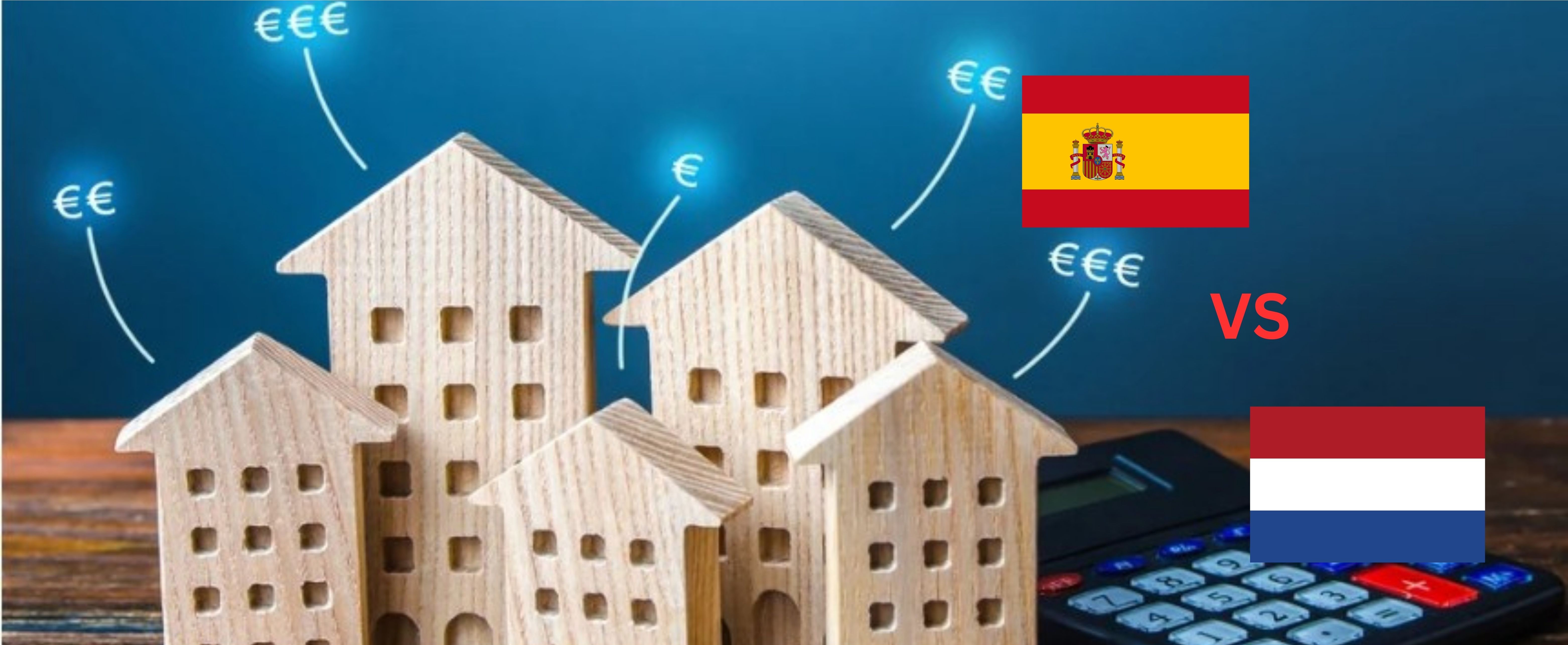
Investing in real estate in Benissa: tax advantages for Dutch buyers compared to the Netherlands
More and more Dutch investors are looking for alternatives outside the Netherlands. The increased tax burden, especially through the Box 3 system, coupled with stricter regulations and declining net returns, has made property investment in the Netherlands less attractive to many individuals.
For this reason, many Dutch buyers choose to invest in real estate in Spain, and in particular in Benissa and the Costa Blanca North. Not only because of the climate and quality of life, but above all because of the tax advantages compared to the Dutch system.
As an independent real estate agent and local specialist active in Benissa, Calpe, Moraira, Teulada, Benitachell and Javea, I advise Dutch buyers who want to invest in Spain in a safe, clear and tax-efficient way on a daily basis.
In this article I explain how real estate taxation works in Spain for Dutch citizens and why Benissa is a solid alternative to investing in the Netherlands.
Property taxation in the Netherlands: the Box 3 system
In the Netherlands, a second home or investment property is taxed under Box 3 (wealth tax).
Key features of the Box 3:
-
Taxation on a fictitious income
-
Not based on actual rental income
-
It does not allow you to deduct maintenance or management costs
-
It is paid annually, even if the property does not generate income
In practice, the investor pays taxes on a profit that may not exist.
Example of a real estate investment in the Netherlands
-
Property value: 450.000 €
-
Taxable assets: €450,000
-
Estimated fictitious return: 6%
-
Fictitious deposit: €27,000
Approximate tax (36%):
€9,700 per year, regardless of actual performance.
Real estate taxation in Spain for non-resident Dutch buyers
Spain applies a completely different system. Dutch citizens who buy a home in Spain as non-residents are only taxed on real income.
Spain does not apply a system equivalent to Box 3
In Spain there is no tax on fictitious income in the real estate sector.
-
It is only taxed if there is real rental income
-
If not rented, the tax is minimal and fixed
-
The investor knows in advance his tax burden
For many Dutch buyers, this difference is a huge advantage.
Annual Property Tax (IBI) in Benissa
IBI is the municipal property tax in Spain.
Guiding values in Benissa:
-
Apartment: between 300 € and 600 € per year
-
Villa: between €600 and €1,200 per year
The IBI is calculated on the cadastral value, which is usually significantly lower than the market value.
Tax for non-rented (non-resident) homes
If the Dutch landlord does not rent out his property in Spain, he must pay a small imputed tax.
Features:
-
Based on cadastral value
-
Typically between €150 and €400 per year
-
Fixed and predictable amount
This tax is not comparable to the Dutch Box 3
.
Rental income tax in Spain
When a Dutch buyer rents out their property in Benissa:
-
Fixed tax rate of 19% (EU citizens)
-
Taxation on net profit, not gross income
Most common deductible expenses:
-
Maintenance and repairs
-
Rental management and administration
-
Insurance
-
Community Fees
-
Mortgage interest
-
Supplies during rental
-
Cleaning and marketing
-
Tax or accounting advisor fees
Example of a rental in Benissa
-
Annual rental income: €30,000
-
Annual expenses: 10,000 €
-
Net profit: €20,000
Tax (19%): 3.800 €
Net profit after tax: €16,200
Wealth tax in Spain for Dutch buyers
Spain has a wealth tax, although with high exempt minimums and regional differences.
In practice:
-
Exemption of approximately €700,000 per person
-
Many non-resident buyers fall below the threshold
-
Frequent result: no wealth tax is paid
Capital gains tax when selling a property in Spain
In Spain, the tax is applied only on the actual gain made on the sale.
-
Progressive rate between 19% and 28%
-
Only on the real profit
-
Purchase, notary and renovation expenses are deductible
In the Netherlands, wealth is taxed annually, even unsold.
Net return on investing in Benissa: a realistic example
-
Villa purchase price: 500.000 €
-
Annual rental income: €32,000
-
Annual expenses: 11,000 €
Net profit: 21,000 €
Tax (19%): €3,990
Final net profit: 17,010 €
Approximate net return: 3.4%, excluding revaluation.
Why Dutch buyers choose Benissa
Benissa offers:
-
High rental demand
-
Lower entrance prices than Javea or Moraira
-
Limited urban development
-
Long rental season
-
Strong demand from buyers and tenants from Northern Europe
This makes Benissa one of the most interesting areas to invest in on the Costa Blanca North.
Buying a property in Spain: key points for Dutch people
Before investing, it is important to:
-
Apply for the NIE number
-
Open a Spanish bank account
-
Define the use and rental strategy
-
Have local tax advice
-
Analyse the tax situation in the Netherlands
-
Verify rental licenses
Frequently asked questions about investing in Spain
Is housing in Spain taxed in the Dutch Box 3?
No. Real estate located in Spain is taxed in accordance with Spanish law.
Do I have to pay taxes if I don't rent the property?
Yes, but it is a reduced and fixed imputed tax.
Is investing in Spain more fiscally advantageous than in the Netherlands?
In many cases yes, especially due to the absence of taxation on fictitious income.
Do I pay taxes in two countries?
Spain and the Netherlands have a double taxation avoidance agreement, although each case must be analysed individually.
Personalised advice for Dutch buyers in Benissa
Every investor has a different situation. If you want to know:
-
What your actual tax burden will be
-
What Net Return You Can Expect
-
Which area best suits your goals
I accompany Dutch buyers locally in Benissa, Calpe, Moraira, Teulada, Benitachell and Jávea, from the first contact until after the signing before a notary.
The first consultation is always without obligation.
Legal and tax notice
The information contained in this article is for informational purposes only and does not constitute legal, tax or financial advice. Tax regulations may change and depend on the personal situation of each investor. It is recommended to always consult with a qualified tax advisor in Spain and/or the Netherlands. No rights are derived from this content.